Six Centuries of Ottoman Rule: What Muslims Today Can Learn From the Civilisation That Once Led the World
What the rise and fall of the Caliphate teaches us about community, governance, and resilience
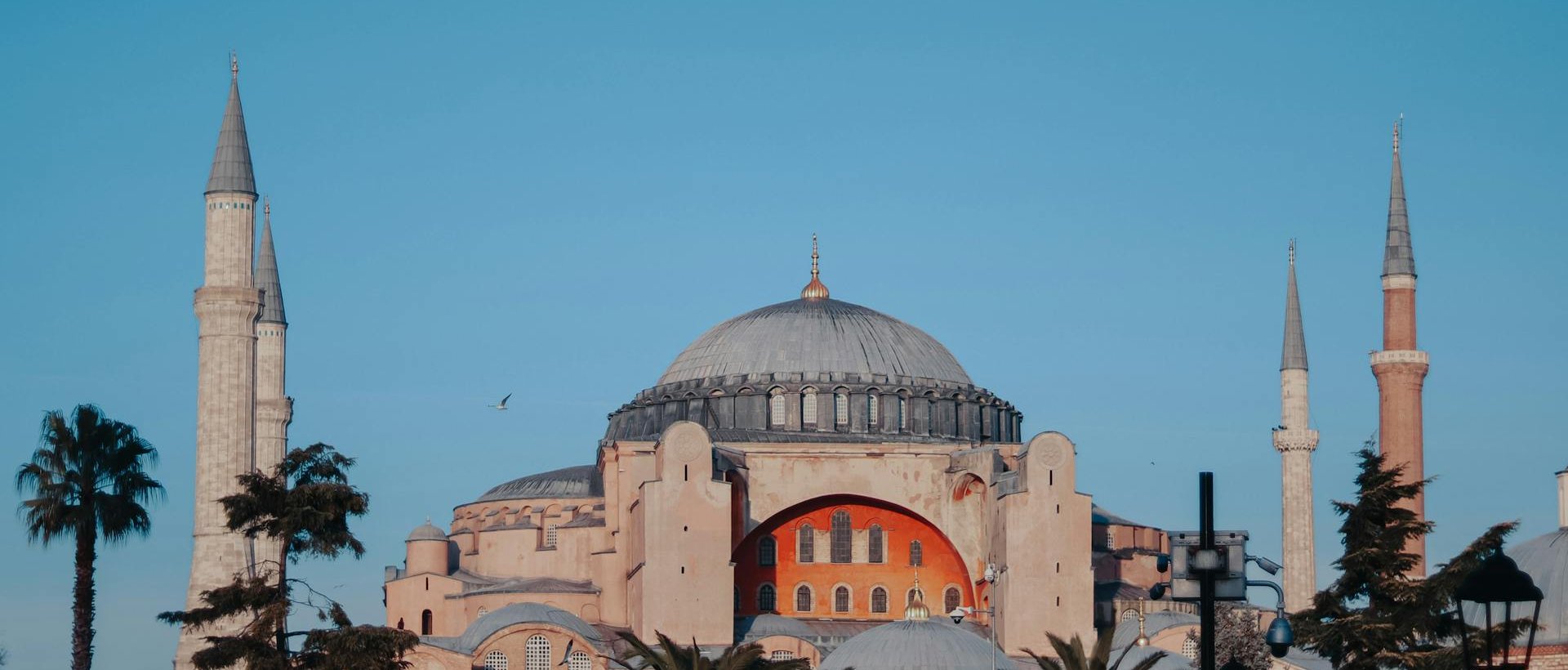
A thoughtful look at the Ottoman Empire, not as nostalgia, but as education.
Most Muslim children in the West grow up without a real sense of their own civilisational history. The Ottoman Empire, six centuries of Islamic governance across three continents, tends to arrive in schoolbooks as a brief chapter, usually near its ending.
This is a loss. Not because history should be rehearsed as pride, but because understanding how Muslim civilisation actually worked, and why it eventually struggled, is part of how we think about the present.
Modern Muslims live after the end of that order. Whether we name it or not, we live in the shadow of its loss. A closer look is worthwhile.
How the Ottomans rose
The Ottomans began in the late 13th century as a small frontier principality in Anatolia, one of many competing Turkish tribal groups. Within two centuries, they had conquered Constantinople, ending the Byzantine Empire that had stood for a thousand years.
What distinguished them early on was a combination of military discipline and administrative seriousness. They built institutions rather than relying on single strong men. They took governance seriously, taxation, record-keeping, legal codification, land rights, at a time when much of Europe had not yet done so.
The Ottomans were also unusually open in one important respect. Through the devshirme system, talented individuals from conquered populations were brought into the imperial service and could rise to the highest positions in the empire, including Grand Vizier. The system had significant moral costs that modern Muslims rightly grapple with. What it also shows is that competence mattered, and origin did not determine your ceiling.
What held the empire together
At its peak, the empire stretched from Algeria to the Arabian Peninsula, from Hungary to Yemen. Running territory of that size required systems, not charisma.
Several features held it together.
Institutions. The legal system, the financial bureaucracy, the military structures, the waqf (endowment) economy. These operated across generations and survived the failings of individual rulers. Strong institutions mattered more than strong personalities.
Religious pluralism within an Islamic framework. The millet system allowed Christian and Jewish communities to govern their own religious affairs under Ottoman sovereignty. It was not equality as modern democracies understand it, but it was stable and functional for centuries, and significantly more tolerant than most contemporary European states.
Adaptive trade policy. The empire controlled key trade routes and extracted wealth from them. Istanbul, Cairo, and Damascus were among the great commercial centres of the early modern world.
The caliphal role. From 1517 onwards, the Ottoman sultan held the title of caliph. This conferred legitimacy across the broader Muslim world and gave the empire a spiritual weight beyond its military power.
Why it eventually fell
The Ottoman decline was not a single event. It was a long process, roughly three centuries depending on where one marks the beginning, driven by several interacting factors.
Military technology stagnated while Europe industrialised. By the 18th century, European armies had opened a gap that Ottoman reforms could not quite close.
Trade routes changed. When European powers reached India by sea, the land-based Silk Road economy that had enriched Ottoman territories began to lose its centrality.
Administrative reform came late and unevenly. The Tanzimat reforms of the 19th century attempted modernisation, but they struggled against entrenched interests and could not fully reverse the accumulated lag.
Internal cohesion weakened. Nationalism, a European idea, fractured the plural framework the empire had relied on. The Balkans, then the Arab provinces, increasingly sought their own identities.
And the empire had external enemies who were, by that stage, better organised and better resourced.
None of these causes sit easily in a single moral story. The lesson is not that the Ottomans lost faith, or that they were punished for impiety. It is that civilisations depend on institutions, adaptation, and competent governance. When those weaken over generations, outcomes follow.
What this means for Muslims now
We do not live in the Ottoman world, and we cannot rebuild it. But a serious reading of that history offers several things worth holding onto.
First, Muslim civilisation has been capable of governance at the highest level. For six centuries, it managed a complex, multi-religious, multi-ethnic territory with a reasonable degree of stability. The sense of perpetual Muslim weakness that sometimes shapes modern discourse is a recent phenomenon, not a long-term truth.
Second, institutions matter more than individuals. The Ottomans lasted because their systems lasted. Modern Muslim communities that want to build for the long term should think institutionally, schools, waqfs, trusts, publishing houses, businesses that outlive their founders, not only charismatic leaders.
Third, merit must travel. The devshirme system, whatever its moral cost, understood that talent has to be given real space to rise. Modern Muslim societies that waste talent through class, tribe, or nepotism pay long-term costs. Competence must be allowed to serve.
Fourth, adaptation is not betrayal. The late Ottomans hesitated on reform for too long, partly because reform was coded as capitulation to Europe. The deen does not require fossilisation. Earlier generations understood this better than we sometimes remember.
Fifth, decline is not irreversible, but it is not reversed by sentiment. Nostalgia for past greatness is a poor substitute for building now. The Ottomans themselves did not rise through nostalgia for earlier caliphates. They rose by building.
A closing reflection
The end of the Ottoman caliphate in 1924 is, in historical terms, recent. Our great-grandparents lived through it. The world we inhabit now, a Muslim Ummah scattered across borders, often navigating someone else's political frameworks, was shaped by that loss.
Recognising this is not a call to grief. It is a call to build.
The world is changing. Muslim families are thinking again about where they live, how they raise their children, what kind of community they want to inherit. That thinking will be clearer if it is grounded in history, including the history of what Muslims have already been capable of.
The Ottomans are not coming back. But the lessons they left, about institutions, merit, adaptation, and foresight, are available to anyone willing to read carefully.