Hijrah in Stages: Learning from the Prophetic Model
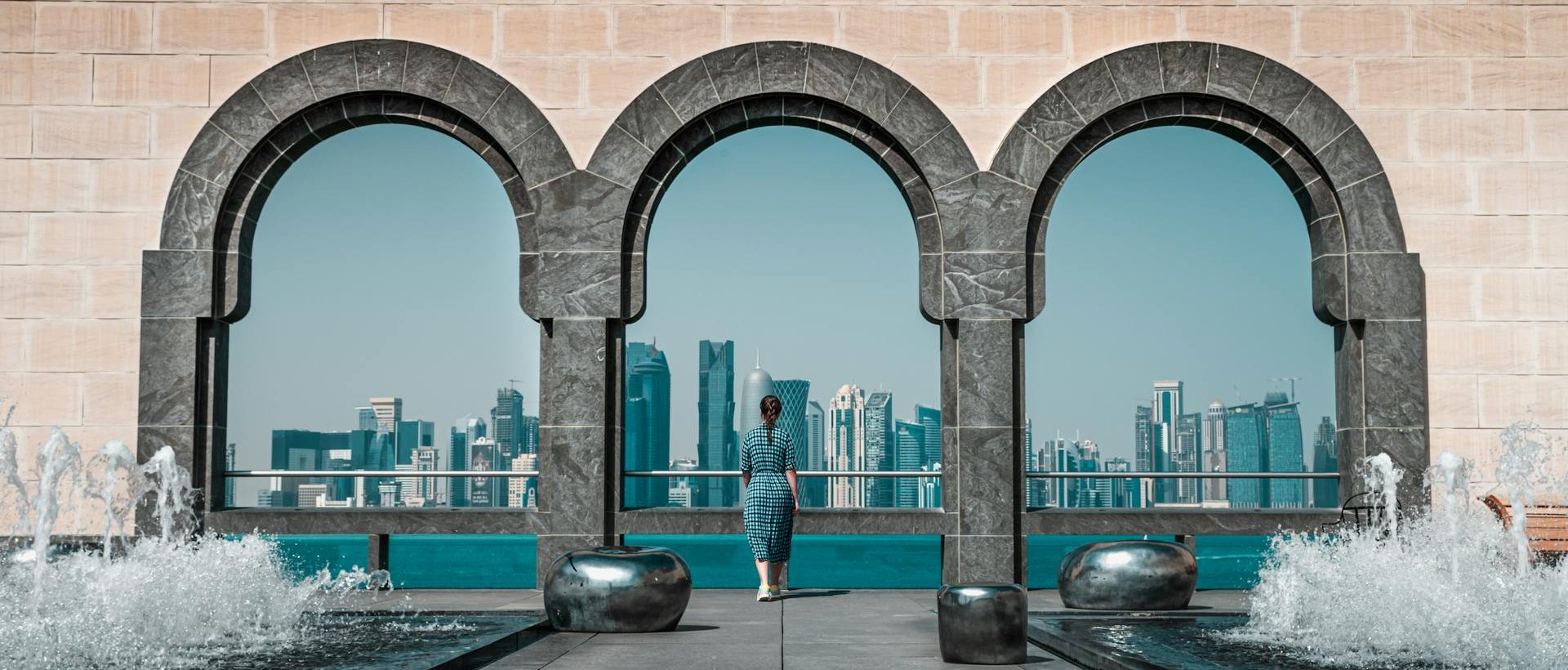
When Muslims hear the word Hijrah, many imagine it as a single leap --- leaving one land behind and beginning anew in another. But the Prophet ﷺ taught us that migration is often staged, deliberate, and strategic. The early Muslims did not leave Mecca all at once. They took steps, sometimes partial, sometimes temporary, always with foresight.
For Muslims in Britain today, this lesson matters. The crises we face --- economic stagnation, climate stress, political hostility, and cultural erosion --- may not demand immediate flight. But they do demand preparation. Hijrah in our time, as in the Prophet's ﷺ, can be a staged process: small steps that create safety and dignity before a full move becomes necessary.
The Prophetic sequence: Abyssinia before Madinah
When Mecca became hostile, the Prophet ﷺ did not order a mass migration to Madinah. That was years away. Instead, he directed a group of companions to travel to Abyssinia, a Christian kingdom known for its justice. This was not the final destination. It was a temporary refuge, a safe space where Muslims could practice their faith in peace.
Only later, when conditions were right, did the greater Hijrah to Madinah take place. This staged approach was deliberate. It bought time. It allowed the community to regroup, strengthen, and prepare. It shows us that migration in Islam is not about panic or despair. It is about foresight and strategy.
Why staged Hijrah makes sense today
Muslims in Britain do not need to abandon everything overnight. But foresight demands steps that reduce dependency on a fragile system. Staged Hijrah makes sense because:
- It lowers the barrier. A second home abroad, or extended stays,
are less daunting than full relocation.
- It builds familiarity. Families learn how schools, healthcare, and
daily life work in another country.
- It preserves continuity. Work, study, and networks in Britain can
continue while options abroad develop.
- It avoids desperation. Acting gradually prevents being forced into
sudden, chaotic moves during crisis.
This is not abandoning Britain. It is building resilience.
Stages of modern Hijrah
Stage 1: Awareness and intention
Recognise the signs of decline in Britain --- economic, cultural, political. Discuss Hijrah as a family. Make intention to prepare.
Stage 2: Exploration
Visit Muslim-majority countries. Spend summers there. Enrol children in short-term schools or camps. Test daily rhythms.
Stage 3: Anchoring
Secure a modest second home or long-term rental. Build ties with local communities. Explore healthcare, education, and services.
Stage 4: Partial relocation
Live part-time abroad while maintaining UK work or study links. This balances continuity with exploration.
Stage 5: Full relocation
When the time is right --- whether by necessity or choice --- move fully with confidence, having tested and prepared.
Each stage is valuable on its own. Each creates options. None requires panic.
Geopolitics and staged migration
The global system itself is shifting in stages. The unipolar dominance of the West is declining. Multipolarity is emerging, with BRICS+, Gulf investment, Turkish diplomacy, and Asian growth reshaping the world. Muslim lands are not peripheral anymore; they are central to energy, trade, and geopolitics.
Just as the early Muslims positioned themselves in Abyssinia to survive until conditions improved, Muslims today can position themselves in societies that are rising in importance. Turkey, Malaysia, the Gulf, and North Africa are building resilience. Britain, by contrast, is sinking under debt, political polarisation, and climate stress.
The family dimension
Hijrah in stages is not only about geopolitics; it is about family life.
- Children: Early exposure to Muslim societies strengthens identity
and language. It reduces confusion and builds confidence.
- Elders: Families can test healthcare systems abroad before
committing. Many Muslim countries offer more dignified elder care than the NHS under strain.
- Livelihoods: Trial relocation allows families to explore business
and career opportunities abroad without gambling everything at once.
This staged approach reduces fear and builds consensus within the family.
Islamic anchoring
The Prophet ﷺ said: "There will come a time when holding on to your religion will be like holding burning coal." (Tirmidhi). Hijrah, in all its forms, is about preserving faith under pressure.
The Qur'an teaches: "Indeed, those whom the angels take in death while wronging themselves -- \[the angels\] will say, 'In what \[condition\] were you?' They will say, 'We were oppressed in the land.' The angels will say, 'Was not the earth of Allah spacious \[enough\] for you to emigrate therein?'" (4:97).
The staged Hijrah model respects both principles: preserve deen today, prepare for tomorrow, and act when Allah opens the door.
Anticipating doubts
- "But things aren't that bad yet." True. But foresight is about
preparing before crisis, not during it. Abyssinia was sought long before Madinah became viable.
- "We can't afford it." Staged Hijrah reduces costs. Exploration and
anchoring can be modest --- a summer visit, a small apartment, shared networks.
- "Isn't this abandoning our duty to Britain?" No. Muslims contribute
wherever they live. But responsibility to deen and family comes first. Building options is not abandonment; it is amanah (trust).
Conclusion: wisdom in steps
Hijrah is not a leap into the unknown. It is a journey of stages. The Prophet ﷺ modelled it with Abyssinia and Madinah. For Muslims in Britain today, the same wisdom applies.
The second home strategy, trial relocations, and gradual shifts are bridges, not cliffs. They reduce fear, build confidence, and preserve dignity. They also align with the global order, where Muslim lands are gaining strength as the West declines.
The choice is whether to prepare calmly in stages --- or wait until circumstances force desperate action. The Sunnah teaches us the answer. Hijrah, then and now, is not just about moving. It is about foresight, faith, and strategy.
Your first practical step
You do not need to have made a decision before you begin. The Prophet's ﷺ model of Hijrah was never about certainty — it was about movement and intention.
Begin with one thing: honest family conversation about the future you are building and the environment you want to build it in. That conversation, held with sincerity and without panic, is the beginning of wisdom.
From there, everything else follows in its own time.
Next Step: Download the [Muslim Family Relocation Checklist](../guides/relocation-checklist) — it follows exactly the staged approach described in this article. [The Second Home Strategy](../article/the-second-home-strategy) shows what stage one looks like in practice.