Energy Wars: How Global Power Struggles Affect Your Bills and Your Future
Energy Wars: How Global Power Struggles Affect Your Bills and Your Future
Every British household has felt it: the sharp rise in gas and electricity bills, the creeping cost of petrol, the way weekly food shops now take a bigger slice of income. Families tighten budgets, cancel extras, and worry about winter heating. What often goes unspoken is that these pressures are not simply the result of mismanagement in Westminster. They are symptoms of global energy wars --- battles fought between states that spill directly into our homes.
For Muslim families in Britain, this is more than inconvenience. Energy lies at the heart of the UK's economic fragility. And when systems come under pressure, minorities often become the first to feel the backlash. Understanding energy wars is not a luxury. It is part of planning for the future --- spiritual, financial, and practical.
The Global Map of Energy
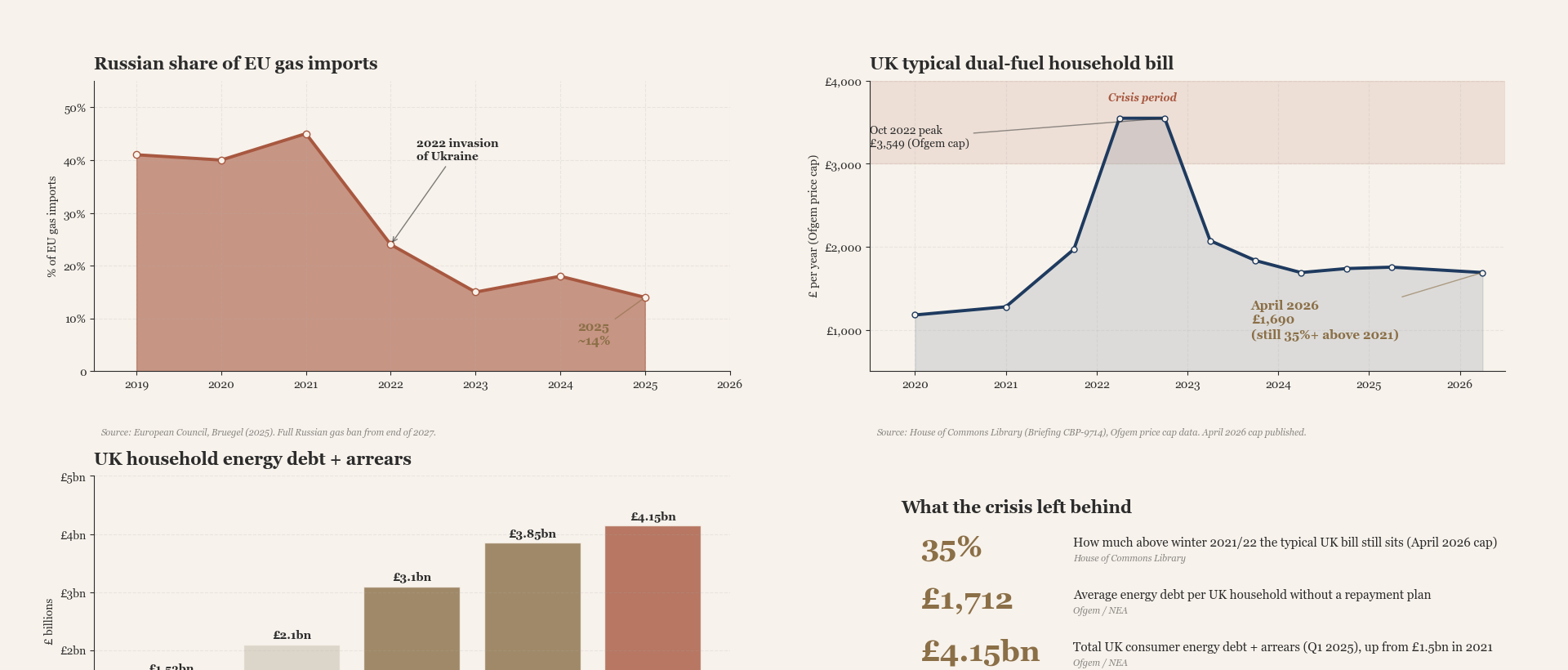
For decades, Europe relied on cheap Russian gas. That ended with the war in Ukraine and the sanctions that followed. Western powers scrambled to find alternatives, importing liquefied natural gas from the US and Gulf states at higher costs. Meanwhile, OPEC+ (dominated by Muslim countries like Saudi Arabia and the UAE, alongside Russia) has flexed its influence, cutting or increasing supply to protect their interests.
Energy is no longer just a market. It is a weapon. Control over oil and gas means control over economies. And Britain, with limited domestic reserves and declining North Sea output, is particularly vulnerable.
How This Hits British Families
- Higher bills: Energy price spikes feed directly into household
costs. The average UK household saw annual bills double between 2021 and 2023.
- Food inflation: Energy powers transport, fertiliser, and
packaging. Rising energy costs mean rising food prices.
- Job insecurity: Energy-intensive industries in Britain, from steel
to manufacturing, struggle to compete globally when power costs are higher.
- Public services under strain: As the government borrows to
subsidise bills, debt rises, leading to more austerity down the line.
For Muslim families already balancing childcare, remittances abroad, and zakat obligations, these pressures create real strain.
The Bigger Picture: Britain's Decline
Energy wars highlight a deeper truth: Britain no longer has control over its destiny. Its economy is tied to external suppliers. Its policies follow Washington's lead. And its industries face decline compared to regions with cheaper, more stable energy.
This fragility has consequences. Declining powers often turn inward, blaming outsiders for problems created by global shifts. Muslims, as a visible minority, risk being targeted as scapegoats for rising costs and falling living standards.
Islamic Anchoring
The Qur'an reminds us: "And He it is who made the earth subservient to you --- so walk in its paths and eat of His provision" (67:15). Provision is from Allah, but when nations hoard or weaponise resources, fitnah follows. For Muslims, foresight means not simply relying on hope but planning for resilience.
Case Study: The Siddiqi Family in Glasgow
The Siddiqis faced soaring bills in their rented flat. Both parents worked, but rising energy and food costs left little to save. Frustrated by the lack of control, they began looking abroad. Through relatives, they invested in a small property in Konya, Turkey.
The difference was striking. Energy bills there were lower, food was cheaper, and halal was abundant without premium pricing. They still live in Glasgow, but the apartment provides both a financial hedge and an escape valve. Each summer they spend weeks there, giving their children confidence in a Muslim environment and reminding themselves that Britain is not the only option.
The Second Home Bridge
This is where the second home strategy shows its value again. It is not about luxury; it is about diversification. A foothold in a Muslim country offers:
- Lower daily costs: Families discover that food, utilities, and
schooling can be far more affordable abroad.
- Alternative systems: Reliance on the NHS or British subsidies can
be reduced if options exist abroad.
- Psychological security: Knowing there is somewhere to turn to
lessens the fear of instability in Britain.
It is a way of tying your camel: taking steps so that faith and family are not left hostage to Western economic fragility.
Practical Considerations for Families
- Begin by tracking how much of your monthly budget is consumed by
energy and food. Awareness is the first step.
- Explore comparative costs in Muslim countries --- Turkey, Malaysia,
and Indonesia often come out significantly cheaper.
- Consider trial stays before committing to property, renting for
summers to understand real expenses.
- Think intergenerationally. A base abroad can benefit children and
grandchildren long after it is first purchased.
Conclusion
Energy wars are not abstract. They are the reason behind bills that keep rising and budgets that no longer stretch. For Muslims in Britain, they are also a reminder of dependency: how tied we are to systems that we neither control nor trust.
Hijrah, even in partial steps, is a way of reducing that dependency. A second home abroad, modest and manageable, is not escapism. It is foresight. It is saying: we will not allow our deen, dignity, or stability to be eroded by battles fought far from our homes.
Safeguarding faith in a time of fitnah means thinking beyond the immediate. The energy wars of today are shaping the world our children will inherit tomorrow. The question is whether we prepare anchors for them now, or leave them fully exposed to a system in decline.
Next Step: Energy pressures are one piece of a larger picture. [BRICS+ and the End of Western Dominance](../article/brics-and-the-end-of-western-dominance) gives the full geopolitical context. [The Second Home Strategy](../article/the-second-home-strategy) offers a practical family response — building options in countries where energy costs are lower and supply is more stable.